
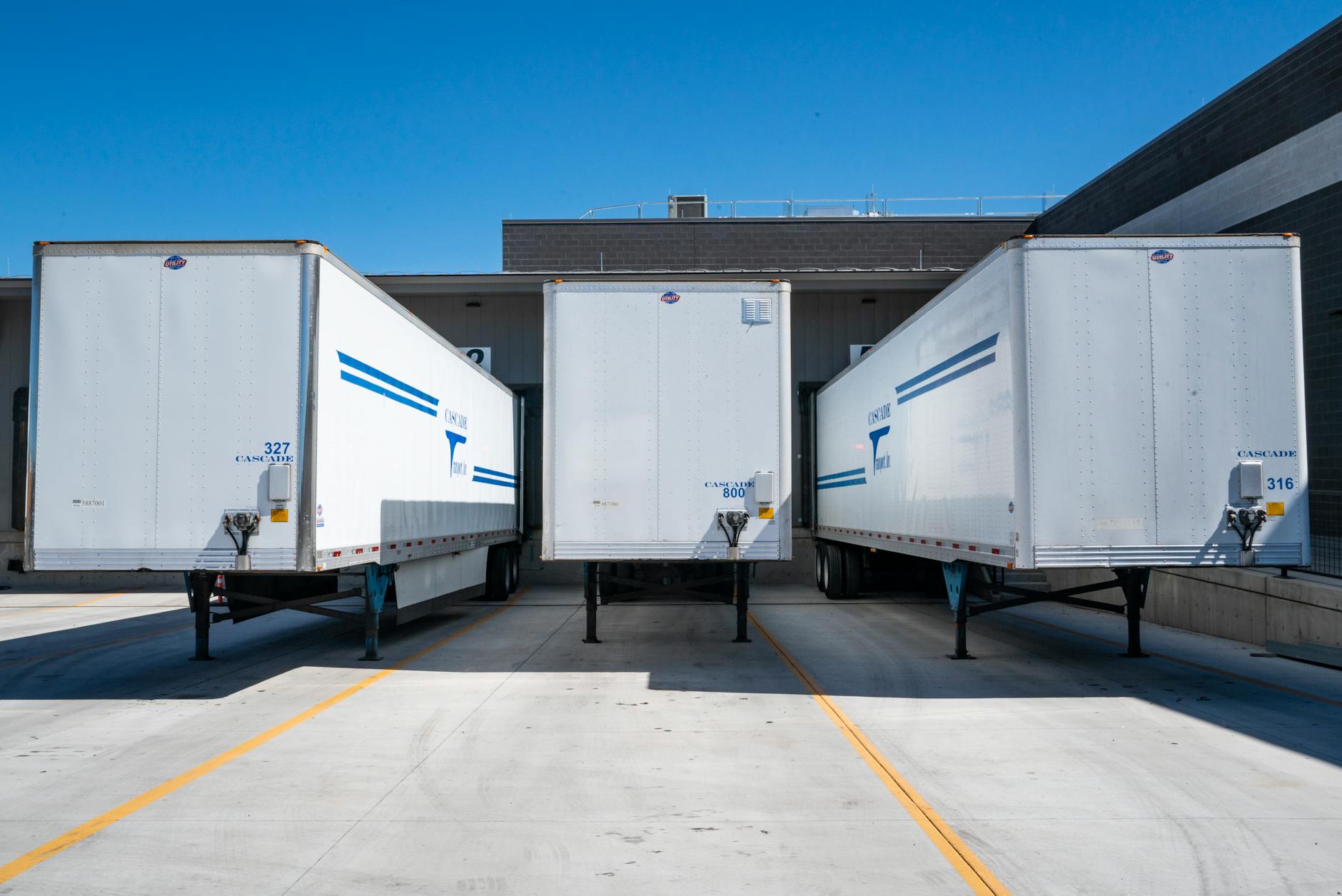
The logistics corridor along I-71/75 between Florence and Erlanger is one of the busiest freight hubs in the Midwest. With Cincinnati/Northern Kentucky International Airport practically next door and a dense cluster of warehouses, freight brokers, 3PLs, and last-mile carriers operating in the area, downtime isn't measured in inconvenience — it's measured in missed loads, contract penalties, and lost accounts.
IT problems in logistics don't sit quietly in a ticket queue. When your TMS goes offline, dispatchers are working blind. When your EDI connection drops, your shipper relationships are at risk. When a warehouse worker can't scan a barcode because the Wi-Fi is down in half the facility, you've got product piling up and schedules slipping. These aren't hypothetical problems — they're the kind of issues that end contracts.
What IT Actually Looks Like in a Logistics Operation
Logistics and transportation companies have a specific IT profile that most managed service providers don't fully understand. You're not running a standard office environment. You've got:
- Transportation Management Systems (TMS) — McLeod, TMW, MercuryGate, or something custom. These need reliable connectivity, proper user access control, and often database maintenance that doesn't get done until something breaks.
- EDI infrastructure — Either direct connections or through a VAN like SPS Commerce or TrueCommerce. When EDI breaks, you may not even know until a shipper calls you. Monitoring these connections proactively is non-negotiable.
- Warehouse Wi-Fi — Handheld scanners, forklifts with mounted terminals, and label printers don't work on a consumer-grade router. A proper warehouse Wi-Fi deployment requires industrial-grade access points positioned to eliminate dead zones in metal-heavy environments.
- Driver-facing tech — ELD devices, driver apps, and communications platforms that need to stay connected. If drivers can't log hours or receive load assignments, you've got compliance and operational problems simultaneously.
- On-call operations — Many logistics companies operate around the clock. Your IT support needs to match that, or at least have clear escalation paths for after-hours critical failures.
Common IT Failures We See in NKY Logistics Companies
Aging server infrastructure. A lot of freight companies in the Florence/Erlanger area are running on-premise servers that are 5-7 years old, without proper monitoring. Hard drives fail silently. RAID arrays degrade. Nobody checks until something stops working. By that point, data recovery is expensive and recovery time is long. A managed IT provider will monitor hardware health continuously and flag problems before they become outages.
Poor network segmentation. Office staff, warehouse floor devices, and IoT equipment (cameras, environmental sensors, dock door systems) often all live on the same flat network. That's both a security risk and a performance problem. When a virus hits one device on a flat network, it has a clear path to everything else. Proper VLAN segmentation keeps your TMS traffic isolated from your guest Wi-Fi and your warehouse scanners.
No redundant internet connection. Many logistics companies in Boone County and Kenton County are running a single ISP connection. When that circuit goes down — and it will eventually — operations stop. A secondary LTE or fiber failover connection costs a few hundred dollars a month and can keep your critical systems online during an outage. For a company moving freight on tight windows, that's an obvious investment.
Ransomware exposure. Logistics companies are an increasingly common target for ransomware. You handle time-sensitive cargo, which means attackers know you're more likely to pay quickly to restore operations. Without proper endpoint protection, email filtering, and a tested backup strategy, a ransomware hit could take you offline for days. Our cybersecurity services include endpoint detection and response (EDR), layered email security, and backup validation to make sure recovery is actually possible.
What Proactive IT Management Looks Like for a 3PL or Carrier
Good managed IT for a logistics operation isn't just "we fix things when they break." It means:
- 24/7 monitoring of servers, network gear, and critical connectivity — with alerts that go to a real person, not just a dashboard nobody checks.
- Patch management scheduled around your operations — not pushed during a peak shipping window on Friday afternoon.
- Backup testing that verifies restores actually work, not just that data is being copied somewhere.
- Documented runbooks for your TMS, EDI connections, and warehouse systems — so when something breaks at 2 AM, the on-call tech isn't starting from scratch.
- Vendor coordination with your TMS provider, EDI partners, and telecom carriers so you're not stuck in the middle of technical disputes between companies that won't talk to each other.
Scaling IT as Your Operation Grows
One thing that distinguishes logistics companies from other SMBs is the rate of growth. A 3PL that adds a new warehouse or expands into a new market needs IT infrastructure to scale with it — fast. Adding a satellite location in, say, Hebron or Walton shouldn't require a 6-week IT project. With the right foundation in place, standing up a new location should be a matter of days: firewall provisioning, VPN tunnel to headquarters, Wi-Fi deployment, workstation setup, and TMS access configured. That's what a managed IT partner with logistics experience can deliver.
Titan Tech works with logistics and transportation companies throughout Florence, Erlanger, Hebron, and the broader Greater Cincinnati/NKY area. We understand the operational pressures you're under, and we build IT environments that prioritize uptime, reliability, and speed of recovery. Our managed services are designed to keep your operations moving — not just your computers running.
If you're currently dealing with aging infrastructure, spotty Wi-Fi in your warehouse, or just an IT situation that's grown beyond what you can manage internally, let's have a straightforward conversation about what needs to change. Contact Titan Tech and we'll put together an honest assessment of where you stand.