
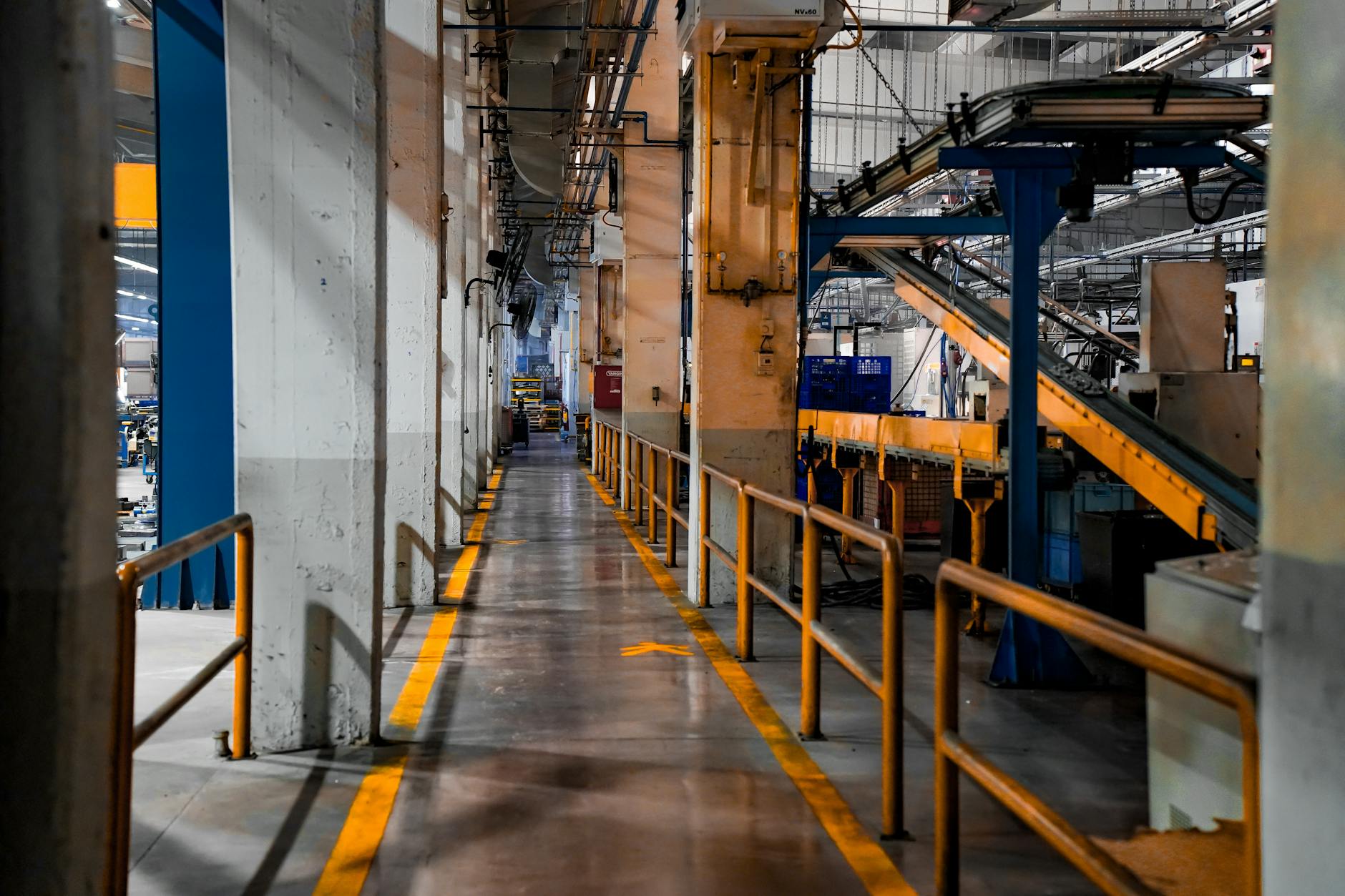
Hamilton, Ohio has been a manufacturing town for over a century — precision machining, metal fabrication, injection molding, and component assembly that flows directly into defense and aerospace supply chains. What many of those shops haven’t fully reckoned with is that CMMC 2.0 compliance is no longer a distant regulatory concern. For any Hamilton manufacturer handling Controlled Unclassified Information (CUI) on behalf of the Department of Defense, the question isn’t whether you’ll need to comply — it’s whether your network will survive the assessment.
What CMMC 2.0 Actually Requires
The Cybersecurity Maturity Model Certification framework was restructured in 2021, and Level 2 — which covers most prime and sub-tier defense contractors — maps directly to the 110 security practices in NIST SP 800-171. That’s not a checkbox exercise. It covers access control, configuration management, incident response, risk assessment, system and communications protection, and more. Critically, Level 2 now requires a third-party assessment (C3PAO) for most contracts. Self-attestation alone won’t cut it.
The Final Rule, published in October 2024, began phasing CMMC requirements into DoD contracts. By 2026, a meaningful percentage of solicitations will carry CMMC requirements. Manufacturers who haven’t started remediation are running out of runway.
Where Hamilton Shop Floors Typically Fall Short
The same gaps show up repeatedly during network assessments at Butler County manufacturers:
Flat, undivided networks. In most manufacturing environments, shop-floor equipment — PLCs, CNC machines, barcode scanners, ERP terminals — sits on the same network segment as office workstations and sometimes even guest Wi-Fi. NIST 800-171 Practice 3.13.3 requires network segmentation to isolate CUI from systems that don’t need it. Flat networks fail this outright.
Unmanaged endpoints. Older Windows workstations running Epicor or Shoptech E2 ERP, operator stations on the shop floor, and engineering desktops often lack modern endpoint detection and response (EDR) tools. CMMC requires active monitoring against malicious code — not just legacy antivirus.
No multi-factor authentication on CUI systems. Practice 3.5.3 is explicit: MFA is required for privileged accounts and for remote access to systems handling CUI. Most small manufacturers haven’t extended MFA beyond email, let alone to ERP logins or remote desktop sessions.
Inadequate audit logging. System and user activity logs must be collected, protected from modification, and reviewed. Without a SIEM or centralized log management, this is nearly impossible to demonstrate to a C3PAO auditor.
No tested incident response plan. NIST 800-171 requires a documented IR capability. “We’d call our IT guy” doesn’t constitute an incident response plan under CMMC scoring.
What Getting Compliant Actually Looks Like
Remediation for a mid-size Hamilton manufacturer typically spans three to six months depending on current posture. The technical stack required isn’t exotic, but it demands discipline:
Network segmentation using VLAN-based architecture separates CUI-handling systems from production equipment, guest access, and general business traffic. This is foundational and touches firewall rules, switch configurations, and wireless access point policies.
Endpoint protection at the CMMC Level 2 threshold means deploying EDR — SentinelOne is a strong fit for manufacturing environments because of its low footprint and behavioral detection — across every system that touches CUI. Managed detection and response (MDR) through Huntress adds 24/7 human analyst coverage on top of automated detection. Our managed cybersecurity services bundle both into a single managed offering.
SIEM and log management gives you the audit trail auditors will look for and the visibility to detect threats before they become breaches. Our SIEM/MDR service handles log ingestion, correlation, and alerting without requiring in-house security staff.
Backup and disaster recovery needs to be documented, tested, and air-gapped from production systems. An encrypted, offsite backup strategy using Veeam — with tested recovery runbooks — satisfies multiple CMMC practices around system protection and continuity. Our backup and DR services are built around exactly that requirement.
Microsoft 365 configuration matters too. CUI must not transit or rest in systems lacking adequate protection. DLP policies, conditional access, and sensitivity labels are part of the CMMC scope for any manufacturer using cloud email and file sharing.
All of this feeds into a System Security Plan (SSP) — the master document C3PAO assessors will review alongside your network diagrams, policies, and configurations. Without it, even a well-secured network doesn’t get you through the audit.
The Business Risk of Waiting
CMMC is a contract eligibility requirement, not a fine structure. The consequence of non-compliance isn’t a government citation — it’s losing the contract, or failing to bid on new work. For Hamilton manufacturers whose revenue depends on the defense supply chain, that’s an existential risk. Prime contractors are also flowing down CMMC requirements to their sub-tiers, so even shops that don’t hold prime contracts directly may face compliance requirements sooner than expected.
Beyond contract risk, the underlying posture matters independently. The manufacturing sector has become a preferred ransomware target precisely because shop floors can’t absorb downtime. A breach that shuts down production lines for a week — not uncommon in ransomware incidents — costs far more than remediation ever would have.
For a detailed breakdown of what Level 2 certification requires, our CMMC compliance overview covers the full 110-practice scope and how to approach a gap assessment. The manufacturing IT services page outlines what a fully managed, compliant infrastructure looks like for this sector.
If your shop is in Butler County or the Greater Cincinnati area and you need to know where you stand on CMMC, reach out to Titan Tech. We’ll run a gap assessment against the 110 NIST 800-171 practices and tell you exactly what needs to change — before an auditor does.