
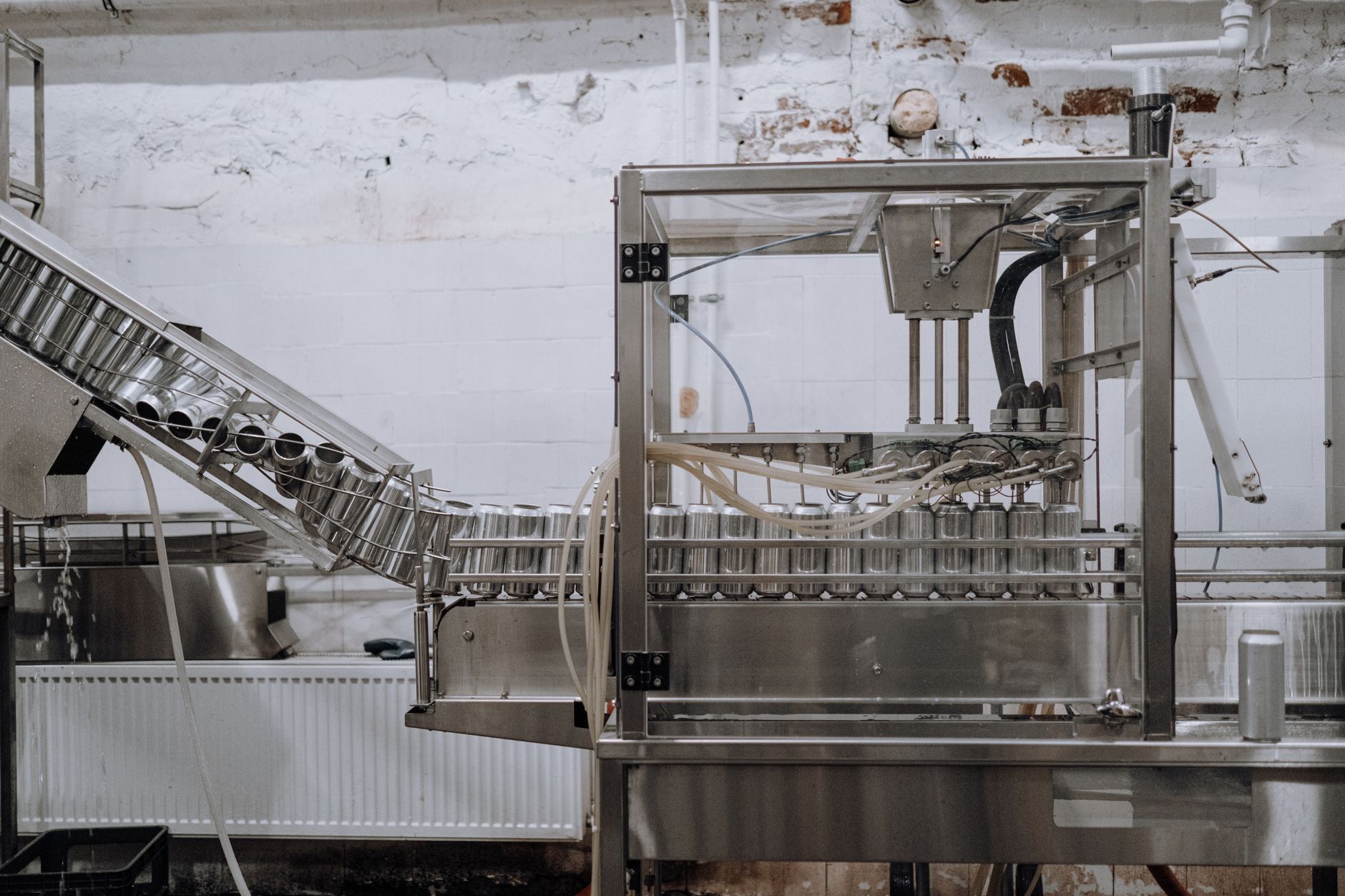
Norwood’s food and beverage operators — from craft distributors to regional contract packagers — run production environments where an IT failure doesn’t stay in the server room. It migrates to the production floor, shuts down batch tracking, corrupts temperature logs, and in a worst-case scenario, lands on an FDA inspection report. Managed IT for Norwood food and beverage businesses isn’t a cost center — it’s an operational requirement that most firms aren’t treating that way.
The Production Floor Is Now an IT Attack Surface
Modern food and beverage facilities have wired their operations together over the past decade: IoT temperature sensors, automated line controls, connected weight and fill systems, cloud-based ERP integrations. The efficiency gains are real. So is the exposure. Each connected device that sits on a flat, unmanaged network is a lateral-movement vector if a threat actor gets a foothold anywhere on the segment.
The problem is not hypothetical. In 2021, a major meat processor paid $11 million in ransom after a ransomware incident forced plant shutdowns across North America. The attack vector was a poorly segmented production network. Norwood operations are smaller, but the network architecture vulnerabilities are identical — and smaller firms have proportionally less runway to absorb the downtime or the reputational fallout with retail and distribution partners.
Network segmentation is foundational here: production systems, HVAC and environmental controls, administrative workstations, and customer-facing portals should not share the same broadcast domain. Titan Tech’s managed IT services include VLAN architecture and ongoing network monitoring specifically designed for mixed-use environments where OT and IT systems coexist on the same physical infrastructure.
Regulatory Data Is Not Just Compliance — It Is a Liability Asset
FDA food safety regulations — particularly FSMA traceability requirements and HACCP documentation obligations — create a data retention and integrity burden that most small and mid-size operators manage informally. Spreadsheets on a shared drive, batch records on a local server without off-site backup, temperature logs that exist only on a single IoT device with no redundant path.
When an auditor or regulatory inspector requests records, the expectation is that you can produce them on demand. When a production system failure or ransomware event wipes out six months of batch documentation, the liability exposure extends well beyond the cost of recovery. It includes the regulatory consequences of being unable to demonstrate traceability back through the supply chain.
Titan Tech deploys Veeam-based backup and disaster recovery solutions that cover both on-premises servers and cloud-integrated platforms, with recovery time objectives designed around operational continuity. For food and beverage operators, that means batch records, ERP data, and quality management files survive hardware failure or ransomware with minimal RTO — and documented restore testing that can be presented during an audit.
Endpoint Threats in Mixed Workforce Environments
Contract packagers and seasonal processors in the Norwood area frequently run mixed workforces: full-time quality and operations staff alongside seasonal or temporary production workers. The IT consequence of high employee turnover is often overlooked — shared credentials, unrevoked access for departed workers, and personal devices connecting to production-adjacent Wi-Fi without mobile device management controls.
SentinelOne EDR deployed across all managed endpoints provides behavioral detection that catches threats even when signatures are unknown. That matters in environments where employees are not clicking phishing links on corporate laptops, but where a shared terminal on the production floor might be used to check personal email between shifts. Huntress MDR adds 24/7 human-operated threat hunting on top of automated detection, closing the gap between an alert firing at 2 AM and someone taking action on it before damage spreads.
Wireless network segmentation is the companion control. Guest SSID, production SSID, and corporate SSID need isolation with appropriate firewall policy between them. Titan Tech’s wireless networking deployments include access point placement engineered for industrial environments, SSID segmentation, and ongoing management — not an install-and-walk-away project that gets revisited only when something breaks.
Microsoft 365 and the Administrative Layer
Food and beverage administrative functions — procurement, AR/AP, customer contracts, HR — increasingly run on Microsoft 365. M365 Business Premium with Azure AD Conditional Access, MFA enforcement, and Defender for Business is the appropriate configuration for a business handling supplier agreements, customer PII from wholesale accounts, and payroll data. The default out-of-box M365 configuration is not that — it is a starting point that leaves significant threat surface unaddressed without deliberate hardening.
Account compromise in the administrative layer of a food and beverage operation is frequently how business email compromise fraud begins: a controller’s inbox is compromised, an attacker monitors supplier payment threads for weeks, then a fraudulent wire request goes out during a routine AP cycle. The FBI reported a median BEC loss of over $125,000 per incident across all industries in 2023. The controls that prevent it — MFA, conditional access, inbox rule monitoring — are standard in a properly managed M365 environment and not optional in an era of targeted financial fraud.
What a Managed IT Assessment Surfaces
For most Norwood food and beverage operators running without a managed services partner, a structured IT assessment will find a consistent pattern: flat network topology with no segmentation between production and administrative systems, backup jobs that have not been restore-tested in over a year, endpoint security limited to Windows Defender default configuration, and administrative credentials shared across multiple users without individual accountability. None of these are unusual — they are the natural result of IT growing organically alongside operations without a dedicated technical function.
The remediation is not a rip-and-replace project. A phased approach — network segmentation first, then endpoint hardening, then backup validation and documented recovery testing — addresses the highest-impact exposures without disrupting production operations. The goal is a defensible security posture that can be demonstrated to auditors, insurers, and enterprise customers who increasingly require their supply chain partners to meet minimum cybersecurity standards as a condition of doing business.
If your Norwood facility is running production systems on an unmanaged network, or your disaster recovery plan has not been tested in more than 12 months, Titan Tech can assess your current state and build a realistic roadmap. Contact us to schedule a no-obligation infrastructure review.