
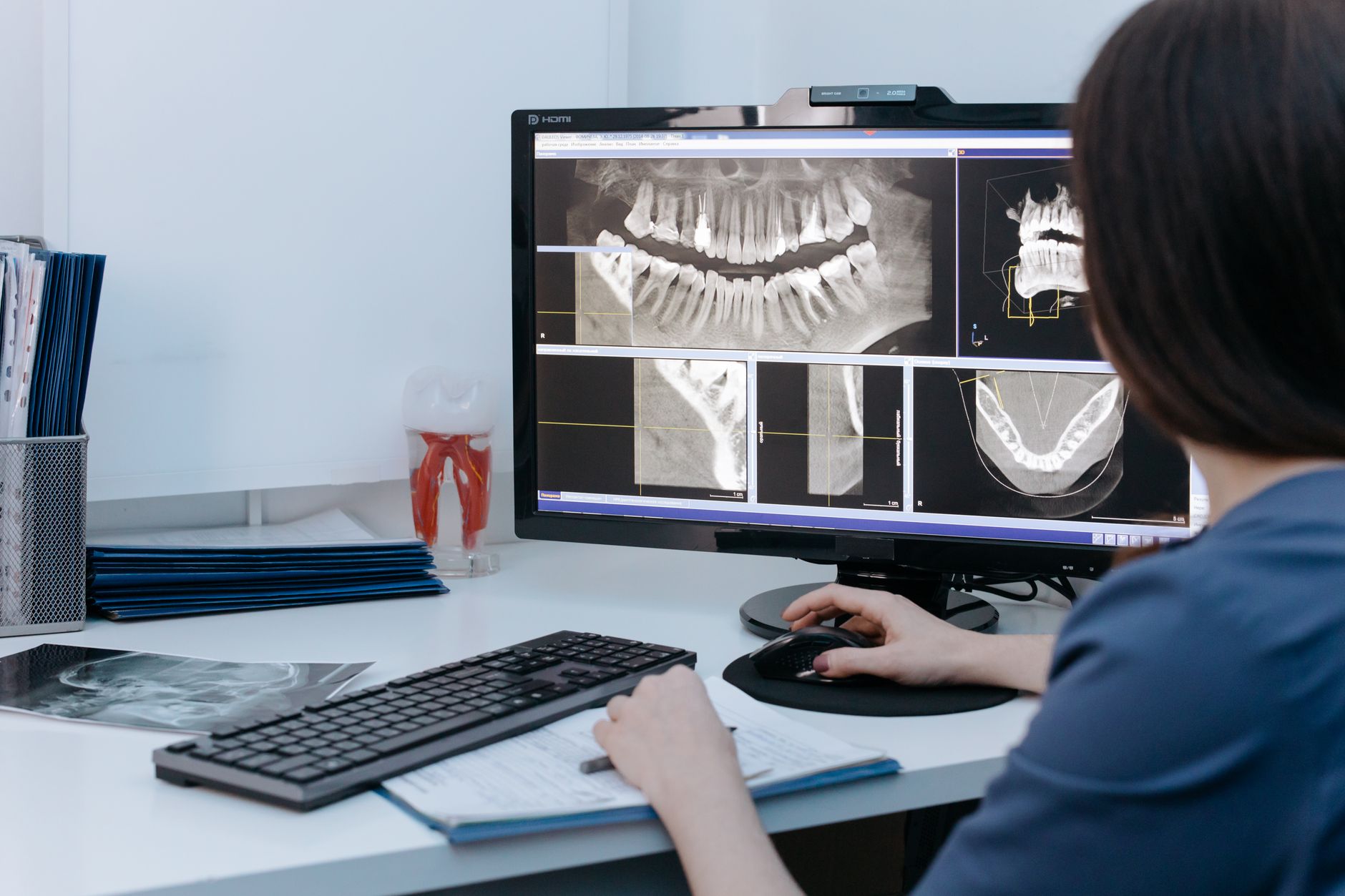
West Chester dental cybersecurity is increasingly defined by what happens between systems, not just what happens on the practice server. Dentrix, Eaglesoft, and OpenDental rarely operate alone. They exchange information with imaging software, online forms, patient-reminder platforms, payment tools, e-prescribing services, dental labs, and Microsoft 365. Each connection may be legitimate, but together they create a data path that many practices cannot fully document, monitor, or restore.
The operational risk is easy to miss because every vendor sees only its own product. The practice, however, owns the entire workflow. If an integration account is compromised, a browser extension is malicious, or a remote-support utility is left active, patient information can move through a route that endpoint protection on the main server never sees.
The interface is part of the clinical system
A front-desk employee may scan an insurance card, import it into the practice-management platform, send a treatment plan through a portal, receive an image from a specialist, and email a financial document before lunch. That process can involve several local applications, cloud services, shared folders, and user identities. Security reviews that inventory only computers and servers leave out the interfaces where the data actually changes hands.
The first practical control is a current integration register. It should identify what connects to Dentrix, Eaglesoft, or OpenDental; what data moves through the connection; which account authorizes it; who supports it; and how access is revoked. Service accounts and vendor logins should have named owners, not generic labels that survive staff changes indefinitely. Remote access should be approved, time-limited where possible, and protected with multifactor authentication.
Flat networks turn one weak integration into a practice-wide event
Dental environments often combine clinical workstations, imaging devices, payment terminals, office computers, guest wireless, printers, and building technology on infrastructure that grew one device at a time. On a flat network, a compromised front-desk system or unsupported imaging workstation may provide a path toward the practice-management database and backup infrastructure.
Segmentation should follow function: clinical systems, business operations, guest access, payment devices, and building or IoT equipment should not share unrestricted trust. That design also makes monitoring more useful. SentinelOne EDR can protect supported endpoints, while Huntress MDR and SIEM monitoring provide additional context around persistence, suspicious identity activity, and events that cross systems. Titan Tech's managed cybersecurity services are most effective when those tools are paired with an accurate network and application map.
Monitoring has to include identities and exceptions
Not every dental device can run a modern security agent. Some imaging sensors, acquisition computers, and vendor appliances depend on tightly controlled software versions. Treating those exceptions as invisible is the wrong answer. They should be isolated, restricted to required destinations, monitored at the network boundary, and reviewed whenever a vendor changes its support method.
The same principle applies to cloud identities. Microsoft 365 Conditional Access, individual user accounts, and multifactor authentication reduce exposure from stolen credentials, but only if shared mailboxes, forwarding rules, OAuth grants, and former-employee access are reviewed. A SIEM and managed detection program should establish who owns each alert and how the practice reaches its IT and software vendors during an incident. Alert collection without response ownership is just a larger log archive.
Recovery must prove the complete patient workflow
A successful backup job does not prove that the practice can see patients. Restoring a database is only one step. The application version, image paths, licensing services, scanner shares, authentication, printers, and vendor integrations must work together. A useful recovery test starts with a realistic outage and ends when staff can open a patient record, retrieve an image, produce a treatment document, and record the result.
Veeam can provide strong backup and disaster-recovery capabilities, but retention, immutability, and restore testing must match the actual workflow. Titan Tech's backup and disaster recovery services focus on that operational test rather than treating a green backup status as the finish line. The test should also document which vendor must be contacted, which credentials are required, and the order in which dependent systems return.
Turn the integration map into operating evidence
For a West Chester dental practice, the goal is not another binder of generic HIPAA policies. It is a working record of systems, connections, owners, exceptions, and tested recovery steps. That record supports risk analysis, accelerates incident response, and gives leadership a defensible way to decide whether a new portal, scanner, or vendor connection belongs in the environment.
If your practice cannot trace patient data from intake through imaging, treatment, billing, and recovery, contact Titan Tech to build an integration map and test the controls around it.