
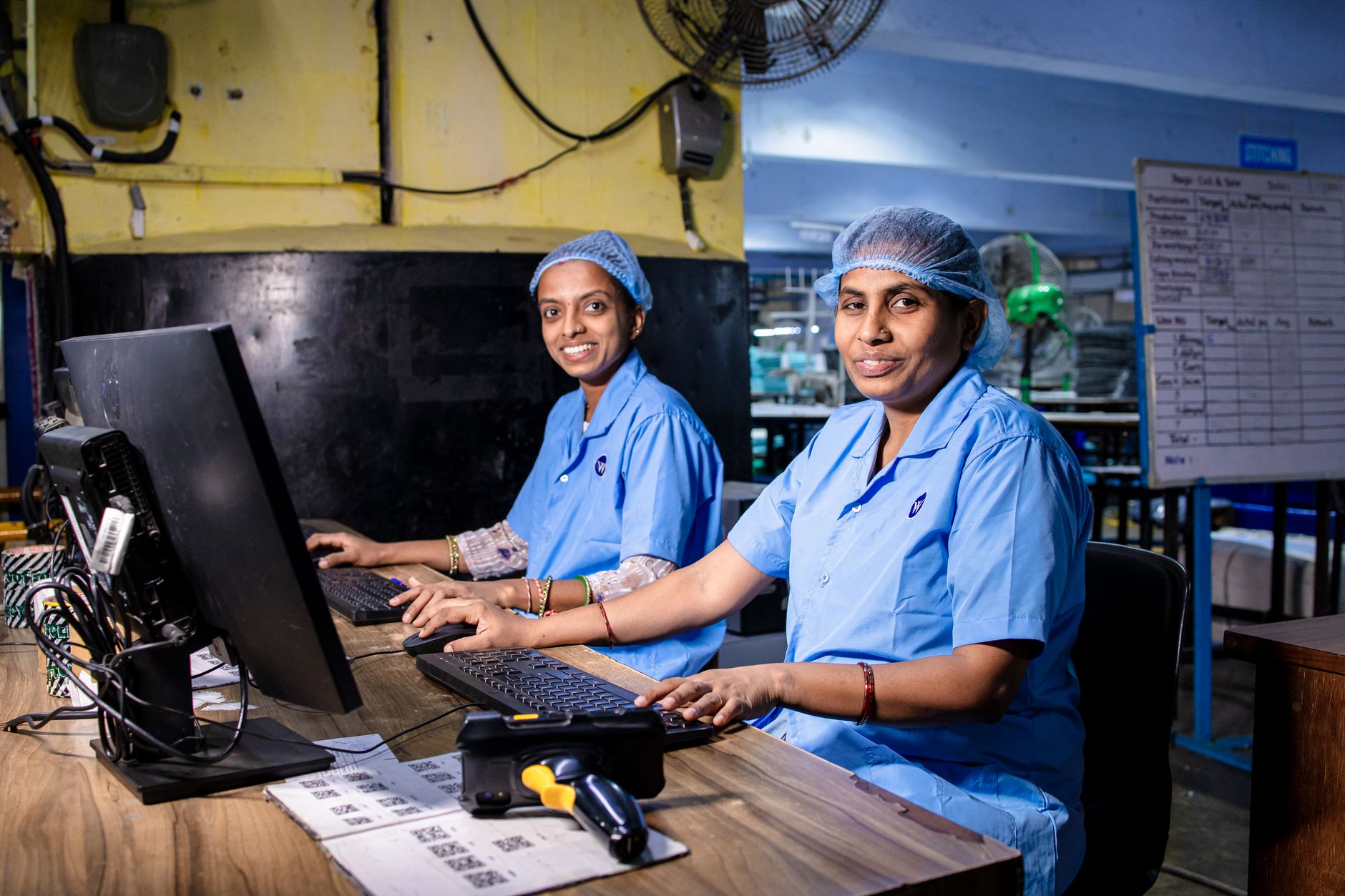
Sharonville manufacturing cybersecurity often breaks down at an ordinary point on the plant floor: the shared production terminal. One workstation may handle job travelers, inventory moves, quality entries, label printing, maintenance records, and access to Epicor, SYSPRO, or Shoptech E2. When every operator uses the same Windows login or ERP account, the terminal becomes fast and convenient, but nobody can reliably say who changed a record, opened a suspicious file, or approved a transaction.
This is not an abstract audit problem. Shared access makes incident response slower. It also turns a small credential mistake into a plant-wide exposure because the account is usually known by multiple shifts, supervisors, temporary employees, and vendors.
Shared credentials erase the evidence needed during an incident
A production supervisor may know which shift used a terminal, but that is different from knowing which person exported a report, changed a routing, or clicked a malicious Microsoft 365 attachment. Security logs tied to a generic account provide a timestamp and device name, not an accountable user. If the same credentials work on several terminals, even the device record may not narrow the answer.
That gap matters when the response team is trying to determine whether an attacker reached the ERP system, a quality share, or a shipping workstation. SentinelOne EDR, Huntress MDR, and SIEM monitoring can show process activity and authentication events, but the investigation remains incomplete when the human identity behind the session is missing. Managed cybersecurity works best when the underlying identity records are trustworthy.
Individual access does not have to slow the line
The usual objection is operational: unique logins take too long, operators forget passwords, and shift changes create queues. Those are design problems, not reasons to preserve a shared password indefinitely.
Plants can use short sign-in workflows, badge or PIN-based authentication where supported, and locked-down kiosk profiles that expose only the applications needed at that station. The ERP should record the individual operator even when the Windows terminal runs in a controlled kiosk mode. Supervisor and maintenance privileges should use separate named accounts rather than a universal elevated login taped inside a cabinet.
A break-glass account may still be necessary when production cannot wait for an identity service outage. That account should be stored securely, monitored, tested, and rotated after use. It should not become the normal second-shift login.
Production terminals need security controls built around their job
Plant-floor computers often run old scanner utilities, label software, machine interfaces, or browser plugins that do not behave like standard office applications. The answer is not to disable endpoint protection. It is to document the required software, tune SentinelOne and Huntress around known production behavior, and review every exception with an owner and expiration date.
The same principle applies to the network. Operator terminals, ERP servers, printers and scanners, machine controllers, vendor connections, and guest wireless should not share one unrestricted network. Function-based segmentation limits the paths available if a terminal is compromised. Firewall rules can then allow the specific traffic required for production while blocking lateral movement toward finance, Microsoft 365 administration, and backup infrastructure. Titan Tech's manufacturing IT services treat switching, wireless coverage, structured cabling, identity, and endpoint security as one production system rather than separate projects.
A backup test should end with a completed production transaction
Recovering an ERP database is not the same as recovering the workflow. A usable test must include identity services, DNS, application licensing, shared folders, print services, scanner paths, label templates, and the configuration of the production terminal itself. The final proof is practical: an authorized operator can sign in, open the correct job, record work, and produce the expected label or document.
Veeam can protect servers and critical workloads, but the recovery plan must preserve clean credentials and a known-good terminal configuration. If the only available restore point returns the shared password that was abused during the incident, the plant has restored the original weakness. Backup and disaster recovery testing should therefore include credential rotation and a production-level validation step, not just a successful virtual machine boot.
Ownership is the control that keeps the design working
Someone must own the terminal inventory, approved software, user-access method, security exceptions, network placement, and recovery test. Managed IT can provide that operating discipline through documented standards, quarterly access reviews, patch scheduling, alert ownership, and change records coordinated with production leadership.
If shared production terminals are obscuring user activity or limiting recovery confidence, contact Titan Tech to review the identity, network, endpoint, and backup controls around the workflow.