
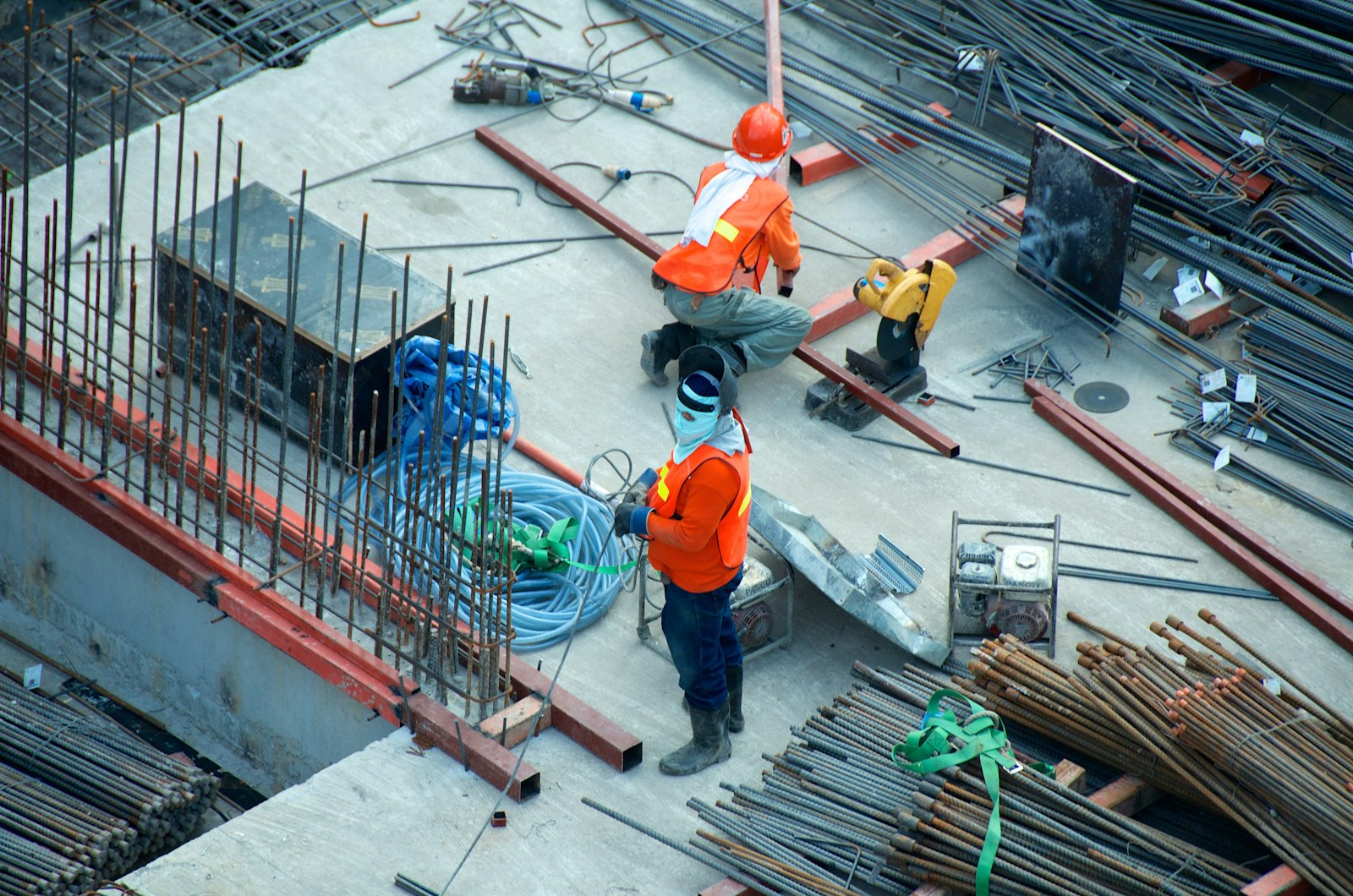
Construction companies in West Chester face a threat they rarely budget for: ransomware operators who specifically target project-based businesses because the timing of an attack matters as much as the data itself.
Unlike a retail operation where a two-day outage is a revenue dip, a mid-size general contractor running active projects across Butler County cannot afford to lose access to bid documents, subcontractor schedules, and project management data for even 48 hours. That pressure is the leverage attackers count on — and they know it.
Why Construction Is a Soft Target
The construction industry has one of the lowest rates of formal IT governance of any sector. Field operations run on tablets and personal phones. Project managers email CAD files back and forth. Subcontractors share login credentials for cloud-based platforms. VPN access, if it exists at all, is almost never monitored.
The result is a sprawling, loosely connected environment where a single phishing email opened on a job-site laptop can cascade into a full network compromise within hours. Three specific vulnerabilities appear consistently in construction environments:
Flat internal networks. Most construction firms run everything on a single network segment — accounting, field ops, project files, and executive systems all live side by side. When an endpoint is compromised, lateral movement to critical systems is trivial. There are no internal walls to slow an attacker down.
Unmanaged endpoints. Field technicians and project managers frequently use personal devices or unmanaged company laptops. Without endpoint detection and response (EDR) deployed consistently, there is no visibility into what is actually running on those machines or whether they have already been compromised.
No monitored backup strategy. Having a backup job configured is not the same as having a tested, monitored disaster recovery plan. Attackers increasingly target backup infrastructure first — then detonate ransomware — knowing that corrupted or outdated backups dramatically increase the pressure to pay.
The Real Cost in the Cincinnati Market
For a West Chester general contractor with $10–30M in annual revenue, the cost of a ransomware incident extends well beyond any ransom figure. Reconstruct a project schedule from memory or paper records. Re-enter two months of accounts payable by hand. Explain to a commercial developer why their build is delayed because project management software has been offline for a week.
In a regional market where reputation travels fast — from the industrial parks in Sharonville to the commercial corridors along I-75 — that kind of operational failure has long-tail consequences that don't appear on an insurance claim.
Construction firms working on federal or municipal contracts also face an emerging compliance pressure: CMMC (Cybersecurity Maturity Model Certification) requirements are beginning to reach subcontractors who touch Department of Defense-funded infrastructure. If your firm does any government construction work, the compliance window is narrowing. CMMC readiness is something to address now, not when a contract requires it.
What a Defensible Architecture Actually Looks Like
Getting construction IT to a defensible state does not require overhauling operations. It requires layering the right controls consistently across every device and user that touches company systems.
Start with endpoint coverage. Every company-managed device should have EDR installed and reporting into a managed detection and response platform. Titan Tech deploys SentinelOne EDR and Huntress MDR across construction clients because the combination catches behavioral threats that signature-based antivirus misses entirely — including fileless attacks and living-off-the-land techniques that are now standard in ransomware campaigns.
Network segmentation limits blast radius. Separating field operations traffic from accounting and executive systems means a compromised estimator's laptop doesn't hand an attacker the keys to your billing system. Combined with 24/7 SIEM monitoring, you gain visibility into traffic patterns and anomalies you simply don't have today.
Backup strategy should be a recovery plan, not a checkbox. Immutable, offsite backups through a Veeam-based disaster recovery architecture ensure that in a worst-case scenario, the question is "how fast can we recover" — not "do we pay the ransom." Recovery time objectives should be defined and tested before an incident, not negotiated during one.
Microsoft 365 configuration closes a major exposure point. Multi-factor authentication on email and SharePoint alone eliminates the most common initial access vector attackers use against construction firms. Properly configured conditional access policies add another layer without creating meaningful friction for field teams.
The Practical Starting Point
Most West Chester construction firms do not need a six-figure security overhaul. They need a realistic assessment of what is currently exposed and a prioritized remediation plan that matches their operational reality. The firms that take the hardest hits are usually the ones who assumed nothing would happen because nothing had happened yet.
If your IT support is reactive — you call them when something breaks — that model addresses symptoms, not risk. Managed IT with security built in means someone is watching for problems before they surface as incidents.
Titan Tech works with construction companies across greater Cincinnati including West Chester, Springdale, Hamilton, and surrounding communities. If you want to understand where your current environment stands and what it would take to close the gaps, reach out here.