
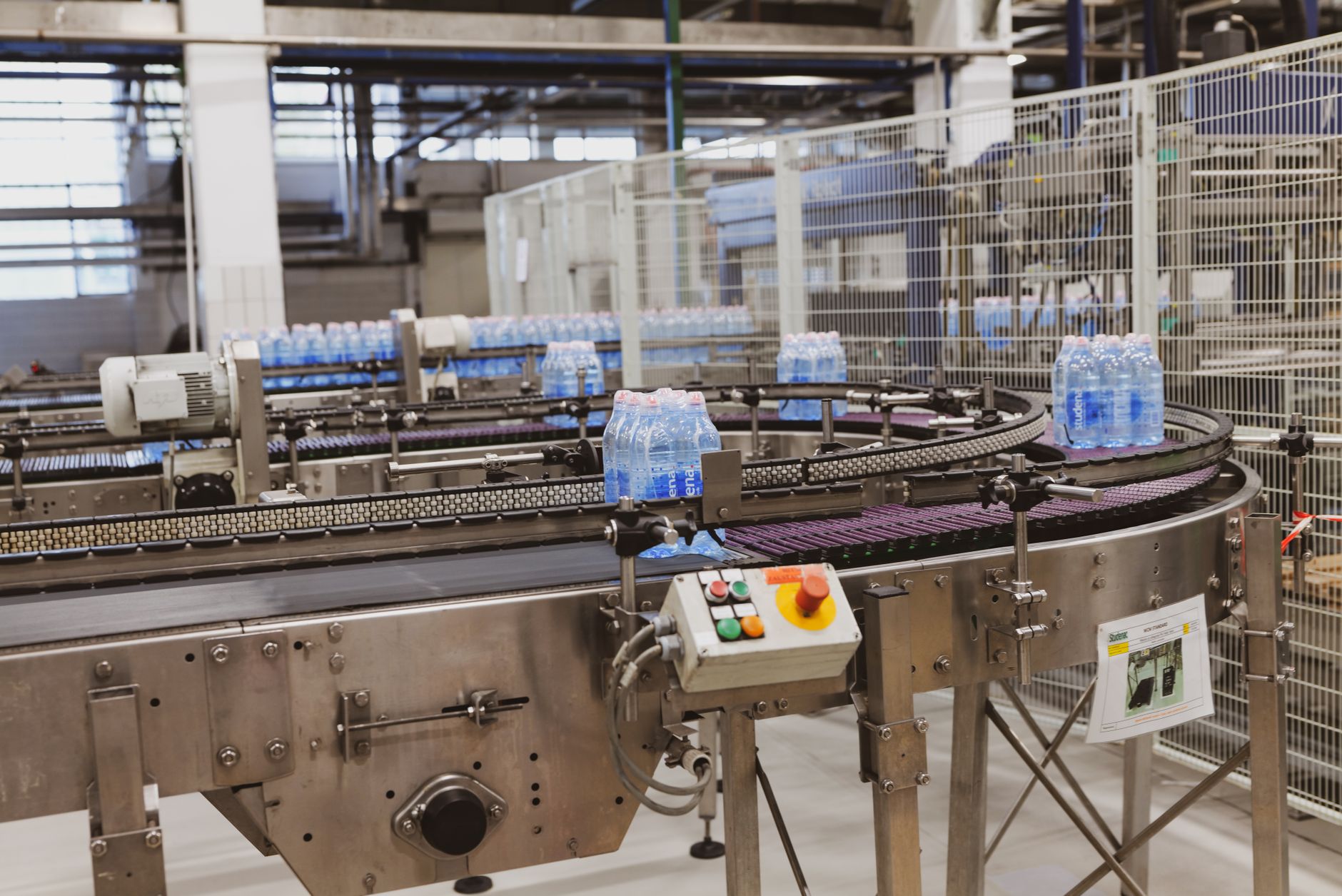
Norwood, Ohio's food and beverage producers — from co-packers along the Norwood Lateral corridor to regional bakeries and beverage bottlers — run on tighter margins and tighter timelines than almost any other manufacturing vertical. A single missed production window because a server went down doesn't just cost a day of output; it costs shelf space at a retail account that will fill the gap with a competitor's product. Yet the IT and cybersecurity posture behind these production lines is frequently years behind the risk. Production scheduling software, POS and inventory systems, and refrigeration monitoring all increasingly share the same flat network as office email — which means a single phishing click can take down a bottling line as easily as it takes down accounting.
The Convergence Problem Nobody Budgeted For
Ten years ago, a Norwood food producer's "IT" was an office server and a point-of-sale terminal. Today that same operation runs ERP-integrated production scheduling, temperature and humidity sensors feeding into compliance logs, barcode scanning for lot tracking, and cloud-based inventory systems that vendors and distributors query directly. Each of those systems was bolted on separately, usually by whichever vendor sold it, with little coordination on network design. The result is an environment where a compromised office laptop can often reach the same subnet as a production-line PLC or a walk-in cooler's monitoring controller. Titan Tech's wireless networking and structured cabling work in food production facilities exists specifically to separate these segments — production, refrigeration monitoring, and office systems each isolated with controlled points of intersection, not one broadcast domain.
Ransomware Doesn't Care About Your Shelf Life
Food and beverage has become an attractive ransomware target precisely because production stoppage is so costly and so visible — a shut-down line means spoiled ingredients, missed delivery windows, and contract penalties, which pushes victims toward paying quickly. Traditional antivirus doesn't stop the credential-stuffing and lateral movement techniques behind most current ransomware campaigns. SentinelOne EDR paired with Huntress MDR gives a Norwood producer after-hours detection and response without needing a dedicated security analyst on staff, and it's a materially different posture than relying on Windows Defender and hoping nobody clicks the wrong invoice attachment. For operations running multiple shifts or a second facility, centralized logging through Titan Tech's SIEM/MDR service closes the visibility gap that lets an intrusion sit undetected for weeks before it triggers.
Backup Has to Cover the Recipe, Not Just the Invoice
Most food producers back up their accounting data reasonably well. Far fewer have a tested, immutable backup of the production scheduling database, formulation records, and lot-tracking history that a recall investigation or an FDA audit would require. If ransomware hits both the primary system and an attached backup drive simultaneously — a common pattern — a producer without offsite, immutable copies can lose the traceability data that food safety regulations require them to produce on demand. Veeam-based backup and disaster recovery, with recovery testing documented rather than assumed, is the difference between a bad week and a facility that can't demonstrate lot traceability when a customer asks.
POS, Inventory, and the Vendor Access Nobody Reviews
Distributors, co-packers, and retail accounts frequently request direct or semi-direct access into inventory and order systems — and that access, set up years ago for convenience, tends to stay open long after the original need passed. A managed IT services partner should be maintaining a current access inventory as standard practice, reviewing what's open and why, rather than discovering forgotten VPN credentials during an incident investigation. Microsoft 365 environments running production email and shared documents benefit from the same discipline — Titan Tech's Office 365 security configuration work closes off the credential-phishing paths that are still the most common entry point into food production networks.
Physical Security on the Production Floor
Access control and video surveillance matter as much on a bottling line as they do in a server closet — tracking who enters cold storage, who has access to formulation records, and who's on the floor after hours ties directly into food safety and loss prevention requirements. Avigilon and Axis camera systems paired with electronic access control give Norwood producers an audit trail that satisfies both a customer's supplier security questionnaire and an internal loss-prevention review, without adding staff to monitor it manually.
Start With a Network Map, Not a New Vendor
Most Norwood food and beverage operations don't need to rip out their production systems — they need an accurate map of how those systems actually talk to each other, followed by segmentation and monitoring that matches the risk. Titan Tech works with food and beverage producers across Greater Cincinnati on exactly that kind of assessment, informed by the same managed security services approach applied across other regulated and production-heavy industries in the region.
Contact Titan Tech to schedule a network and security assessment for your Norwood production facility before an outage or a breach forces the timeline.