
A property manager can secure every leasing-office laptop and still leave the portfolio exposed through a door controller, camera recorder, intercom, or contractor account. Norwood property management cybersecurity is often judged by office controls, while the systems that operate the building sit on shared networks, retain sensitive records, and accept remote vendor connections that nobody reviews.
That gap matters because property operations combine several risk classes in one environment: tenant Social Security numbers and bank details, vendor payment instructions, surveillance footage, physical credentials, building automation, and employee Microsoft 365 accounts. A compromise does not have to encrypt the whole company to create a serious incident. An attacker who diverts one maintenance ACH payment, exports an applicant file, or disables entry systems during an outage can disrupt operations and create liability.
The building network is part of the security boundary
Many properties evolved one device at a time. A camera system was added, then managed Wi-Fi, then access control, package-room equipment, printers, and environmental controls. If those devices share a flat network with leasing workstations or the property-management application, a weak appliance or forgotten vendor login can become a path into the business environment.
The practical answer is segmentation built around function and trust. Tenant and guest Wi-Fi should not reach management systems. Cameras, access control, building equipment, and office devices need separate network segments with explicit rules between them. The switching, firewall configuration, access-control platform, and physical cabling should be documented as one operating system for the property—not treated as unrelated projects.
Vendor access needs an owner and an expiration date
Property managers depend on HVAC contractors, elevator vendors, camera installers, locksmiths, accountants, and software providers. Remote access is sometimes left in place because removing it could slow the next service call. That convenience becomes an unmanaged identity problem when accounts are shared, multifactor authentication is absent, or the vendor relationship changes.
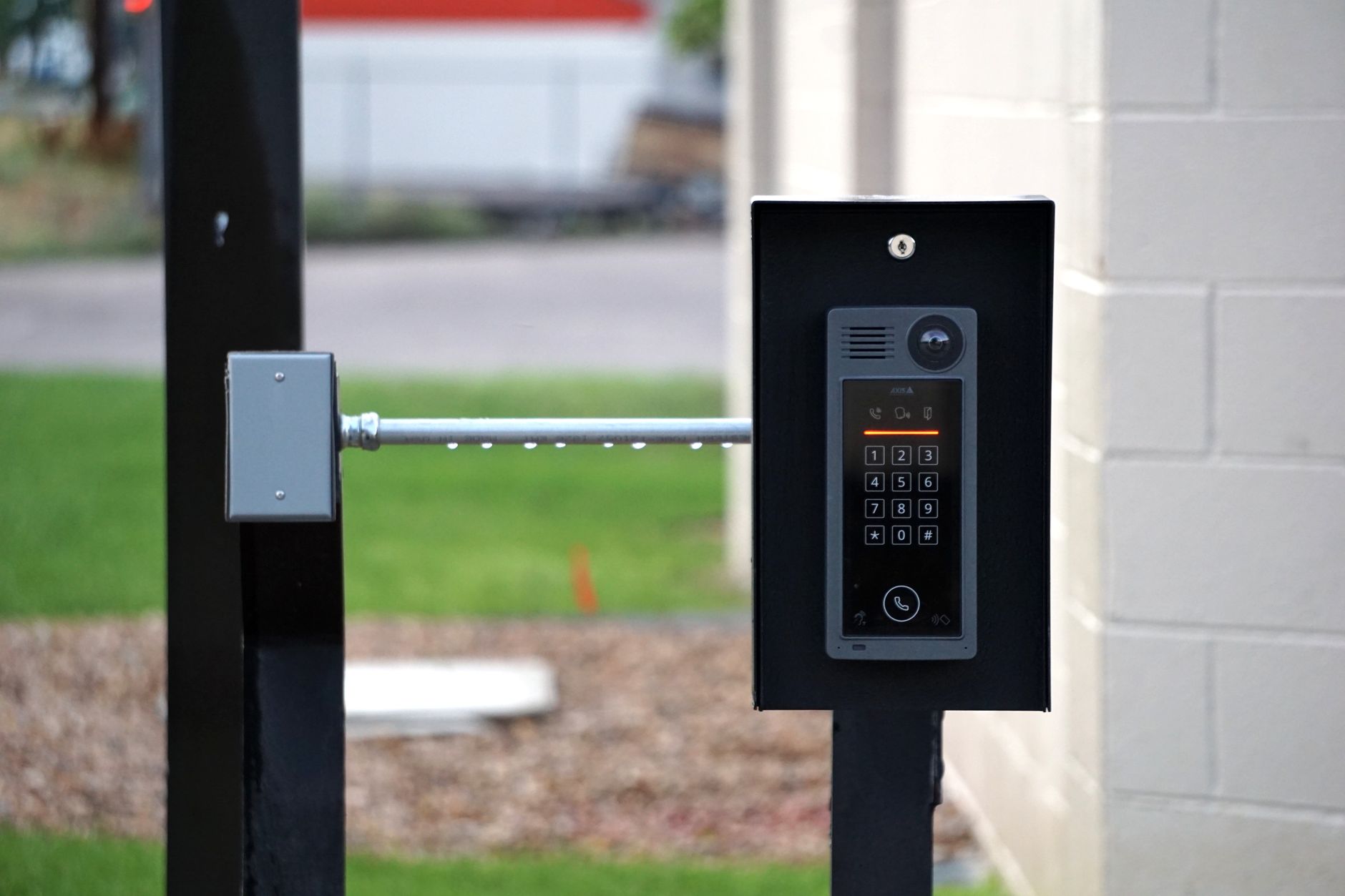
Every remote path should have a named business owner, individual credentials, multifactor authentication, logging, and a scheduled review. Temporary access should expire automatically. When an employee, contractor, or property changes hands, the offboarding checklist must cover Microsoft 365, property applications, VPN access, alarm codes, mobile credentials, and physical badges. Door events from Avigilon or UniFi Access and video from Axis, Avigilon, or UniFi Protect are useful evidence only when clocks are synchronized, retention is intentional, and somebody can retrieve the records.
Detection has to cover both people and endpoints
Endpoint protection alone will not catch every property-management incident. SentinelOne EDR can contain malicious activity on supported computers, while Huntress MDR adds human review and escalation. SIEM monitoring connects identity, endpoint, firewall, and other security events so a suspicious Microsoft 365 login can be evaluated alongside a new remote session or unusual device activity. A credible managed cybersecurity program also defines who responds after hours and who has authority to disable an account or isolate a system.
Payment changes deserve a separate control. Email is not sufficient proof that a contractor changed banks. Staff should verify new or modified payment instructions using a known telephone number, with a second person approving high-value changes. That process blocks a common business-email-compromise outcome even when a convincing message reaches the accounting queue.
Recovery must be tested as a property workflow
A green backup dashboard does not prove that a leasing office can operate after ransomware or equipment failure. Recovery tests should follow the real sequence: restore identity and core servers, validate the property database, reconnect document shares, confirm printing and scanning, and verify that staff can communicate with tenants and vendors. Veeam backups should be protected from the same administrative credentials used in production and tested against defined recovery times.
The test also needs a building-operations branch. Who can issue credentials if the access-control server is down? Can staff retrieve footage after a recorder replacement? Is there a manual process for move-ins, lockouts, and emergency access? A documented backup and disaster recovery plan should answer those questions before an outage, not during one.
Treat the portfolio as one control environment
The strongest property-management programs use the same baseline across every site: segmented networks, current inventories, named owners for remote access, consistent Microsoft 365 conditional-access policies, monitored endpoints, tested recovery, and documented credential removal. Individual buildings will still differ, but exceptions become visible and deliberate instead of accumulating unnoticed.
If your Norwood properties have grown through one-off camera, network, access-control, and IT projects, contact Titan Tech for a portfolio-level review that maps the technical dependencies and identifies the controls most likely to fail under pressure.