
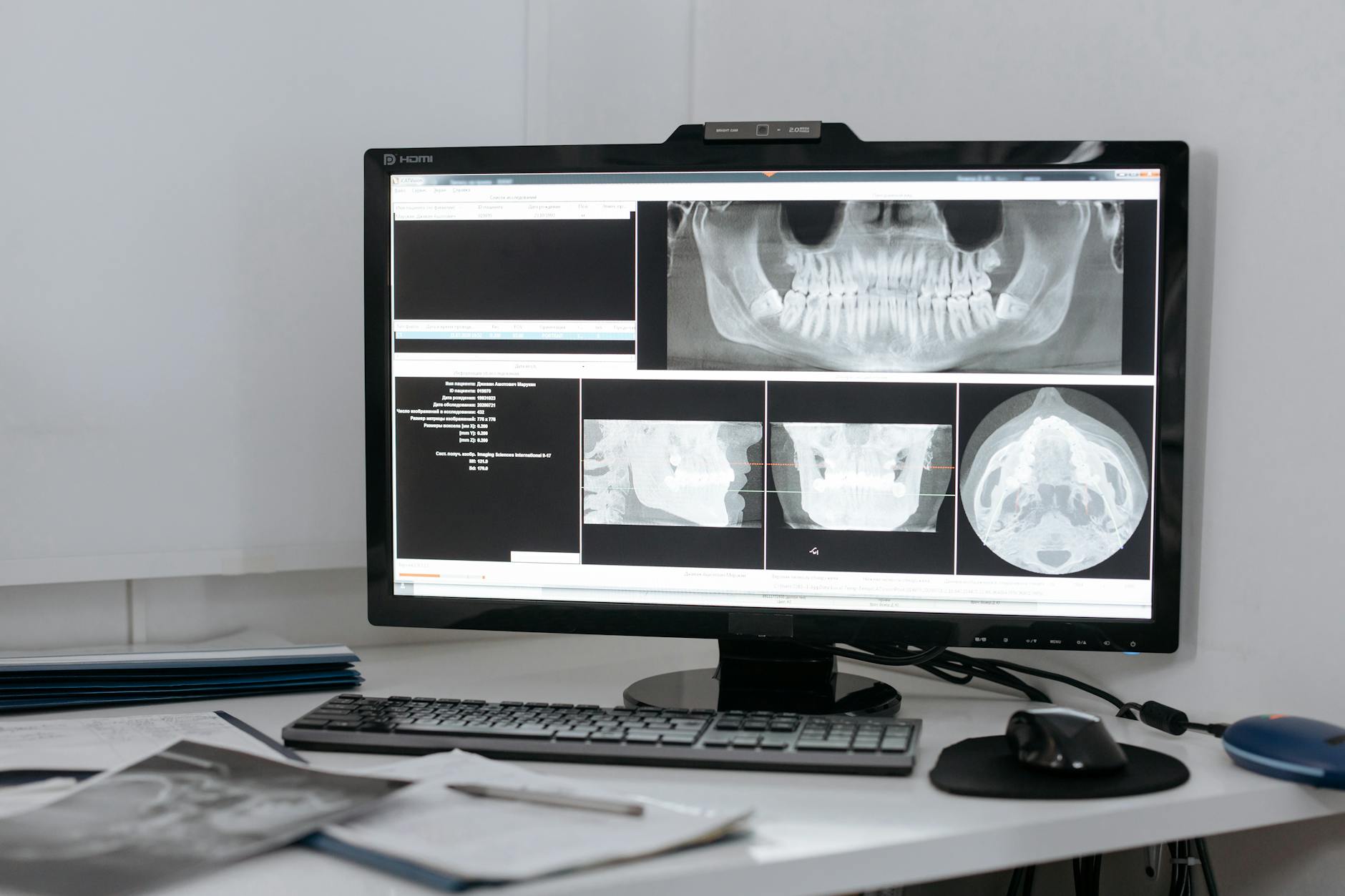
Dental practices in Sharonville — like most independent offices in the Cincinnati suburbs — tend to operate with lean IT setups: a server running Dentrix or Eaglesoft, a handful of workstations, and a shared drive for digital radiographs. That infrastructure is enough to see patients. It is not enough to survive a ransomware attack, and it is increasingly not enough to satisfy HIPAA auditors.
Healthcare ranked as the most targeted industry for ransomware across 2023 and 2024, and dental offices are not exempt from that trend. Attackers specifically pursue small-to-midsize practices because they hold high-value patient data — names, Social Security numbers, insurance details, clinical histories — while lacking the layered defenses of hospital networks. A solo or small-group dental practice in Sharonville is, from an attacker’s perspective, a soft target with a hard reward.
The Infrastructure Problem
Most dental offices were not built with security in mind. Imaging workstations frequently run older versions of Windows because the practice management software vendor has not certified newer OS releases. Backups, where they exist, are often unmaintained local drives sitting beside the server — which means ransomware encrypts the backup alongside everything else. Remote access for IT vendors is commonly a basic RDP connection with a shared password that hasn’t rotated in years.
None of this is negligence in the malicious sense. It’s the compounded result of treating IT as a one-time capital expense rather than a managed, ongoing function. That posture has become genuinely dangerous.
Managed IT services that include behavioral endpoint detection — tools like SentinelOne EDR and Huntress MDR — catch ransomware at the process level before encryption begins. That is a materially different capability than traditional antivirus, which depends on known file signatures. Dental-specific ransomware variants are engineered to evade signature-based detection, which is why the healthcare vertical keeps getting hit.
What HIPAA Actually Requires
The HIPAA Security Rule requires every covered entity — and every dental practice qualifies — to implement technical safeguards around electronic protected health information (ePHI). The core requirements are not ambiguous:
- Access controls limiting who can view patient records
- Audit logs tracking access to ePHI systems
- Transmission security for data moving across any network
- Documented backup and disaster recovery procedures tested at regular intervals
A ransomware event that encrypts patient records is, under HIPAA, a presumed breach. Unless you can demonstrate — with a documented risk analysis and technical controls — that the encrypted data was not exfiltrated or accessed, you face mandatory breach notification: to affected patients, to HHS, and if more than 500 records in a state are involved, to prominent local media outlets.
OCR enforcement against small practices is not theoretical. Penalty actions have been taken against solo and small-group practices for failures as basic as an absent risk assessment and an untested backup. The argument that a practice is too small to matter does not hold in a breach investigation. Size determines workload, not liability.
Backup Is Not a Checkbox
A working, regularly tested, offsite backup is the single highest-impact control for ransomware resilience. Backup and disaster recovery solutions like Veeam, configured with immutable offsite copies, convert a ransomware event from a catastrophic loss into a recoverable disruption — typically four to eight hours of downtime rather than a total write-off of patient data.
The critical word is tested. A backup you have never restored from is an assumption, not a control. Practices should run documented restore tests quarterly at minimum, with results logged as part of HIPAA compliance documentation. If your current IT provider cannot show you a restore test log, that is the gap to address first.
Network Segmentation Is Not an Enterprise Luxury
Intraoral cameras, digital X-ray workstations, patient-facing check-in kiosks, and administrative PCs should not share a flat network. When every device sits on the same subnet without firewall rules between segments, a compromised patient device or a vendor’s laptop brought on-site becomes a direct pivot point to the server running your Dentrix or Eaglesoft database.
Properly segmented wireless networking separates patient Wi-Fi, clinical imaging systems, and administrative infrastructure onto distinct VLANs with inter-segment traffic policies. This is standard configuration — it does not require enterprise-scale hardware — and it significantly limits lateral movement if any single device is compromised.
The same principle applies to cybersecurity monitoring: a SIEM that aggregates logs from firewall, endpoint, and authentication systems gives you visibility into what is happening across all segments, rather than treating each device as an isolated island.
Where to Start
If your Sharonville practice is operating without a managed service agreement that explicitly addresses HIPAA technical safeguards, the near-term priorities are clear.
Start with a documented risk assessment — not a compliance checkbox, but a genuine analysis of where ePHI lives, who has access, and what controls are in place or absent. This document is the first thing OCR requests following a breach report.
Then verify your backups: can you restore your Dentrix or Eaglesoft database from an offsite copy right now? When was the last time someone tested it?
Then address endpoint security. Behavioral EDR — not legacy antivirus — is the current standard for any practice that holds ePHI.
Titan Tech provides managed IT and cybersecurity services to dental practices throughout the Cincinnati area, including Sharonville, with configurations built around HIPAA requirements. If you’re unsure where your practice stands, contact us for a straightforward risk assessment.